


For a small tourism city managing amusement, food and beverage, and hotel occupancy taxes with a lean team, paper-based filings meant one staff member spending hours every month recalculating returns, verifying payments, and chasing taxpayer errors. By partnering with Localgov, powered by Azavar, the City of Galena, Illinois moved to a fully digital, auto-calculating platform — eliminating nearly all manual return-processing work, lifting license registration compliance to 95%, and producing the accurate occupancy data its regional economy depends on. Their Finance Director’s verdict: “higher than a 10.”

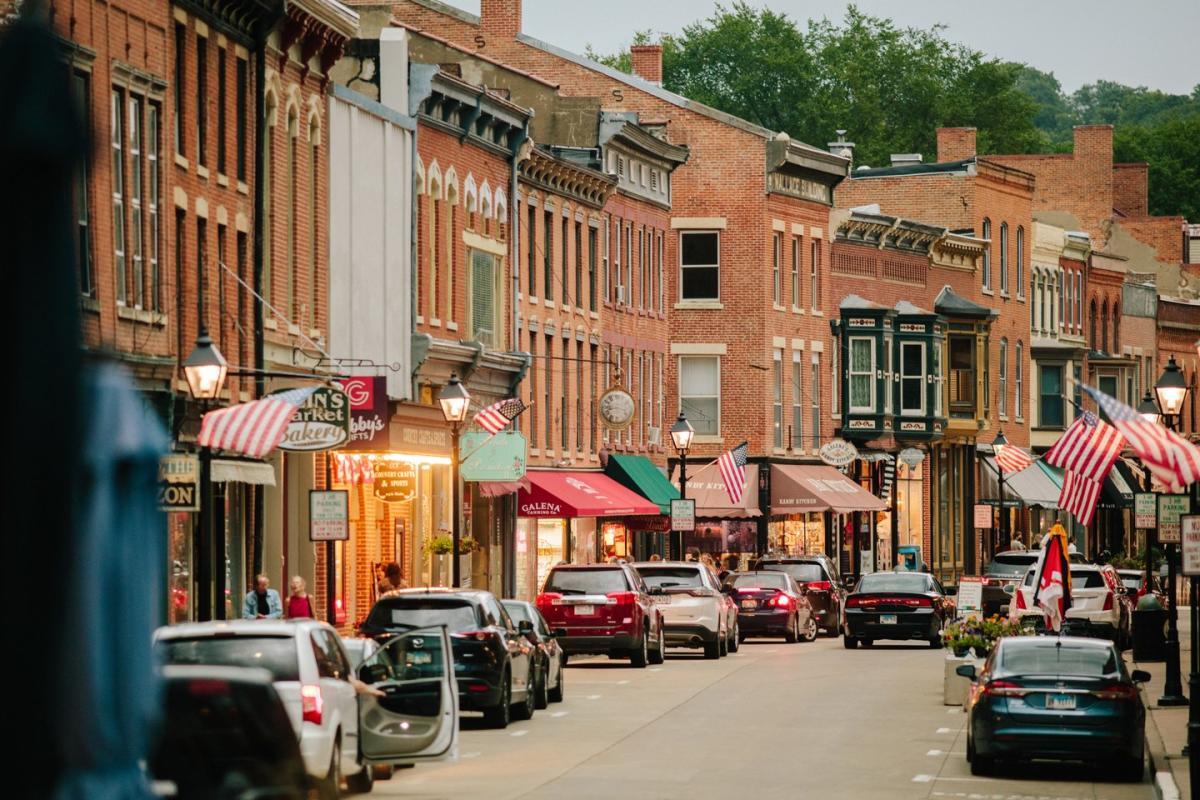
Nestled in the rolling hills of northwest Illinois along the Mississippi River, the City of Galena is one of the Midwest’s most beloved historic destinations. Home to roughly 3,200 residents, Galena draws nearly one million visitors each year to its meticulously preserved 19th-century downtown, the Ulysses S. Grant Home, boutique lodgings, and a full calendar of seasonal festivals and events. Recognized by HGTV as one of America’s most charming small-town downtowns, Galena is a destination with national reach. Tourism is the engine of Galena’s economy. Jo Daviess County recorded $333 million in direct visitor spending in 2024, supporting more than 3,000 local jobs.
That reliance on hospitality makes tax compliance and data accuracy a civic priority — not just for city revenue, but for the occupancy statistics shared with the county and the regional Visitors Bureau to guide economic planning.
The city administers amusement, food and beverage, and hotel occupancy taxes across its lodging and hospitality sector. With a lean finance team overseeing accounts payable, utility billing, licensing, and cash receipts, efficiency is essential. City leaders recognized that to keep pace with a thriving tourism market, they needed a modern tax and licensing administration platform that produced trustworthy data as well as timely payments — without burying staff in manual work.
No video selected
Select a video type in the sidebar.
Before partnering with Localgov, administering Galena's three tax types was a relentless manual cycle. Every paper return that arrived at city hall required the administrative assistant to work through a three-step process: first, re-do the taxpayer's math to confirm the return was calculated correctly; second, verify that the payment received matched the amount stated; and third, contact the taxpayer if anything was wrong. Multiply this across every lodging, restaurant, and amusement operator filing monthly, and the hours consumed were substantial — hours a small team simply could not spare.
Errors were not the exception. Taxpayers filling out paper forms made calculation mistakes regularly. And even when they got the numbers right, manual data re-entry on the city's end introduced a second layer of risk. For a city whose hotel occupancy tax returns feed directly into monthly economic statistics shared with Jo Daviess County and the regional Visitors Bureau, an inaccurate return was more than an administrative inconvenience — it was a data quality problem with real downstream consequences for regional economic planning.
Licensing renewals compounded the problem. Each year, staff had to manually track which liquor licenses were approaching their April 30 expiration, notify operators, calculate prorated fees for mid-year applicants by hand, and reconcile payments against a business list maintained in spreadsheets. A missed renewal or a miscalculated prorate didn't just create extra work — it created compliance gaps and potential disputes that fell squarely on the city to resolve.
The city needed a solution that would stop errors before they started, eliminate the manual recalculation cycle entirely, automate the renewal and compliance tracking burden, and free its staff to focus on the work that actually required human judgment.
City leadership connected with Localgov through a trusted relationship: Azavar's president had deep roots in Illinois local government, and a mutual connection with Galena's city administrator opened the door to a partnership built on genuine alignment of goals.
What sealed the decision was the product itself — and the team behind it. Localgov's platform was configured specifically to Galena's ordinances and reporting requirements, enabling amusement, food and beverage, and hotel occupancy tax returns to be filed and paid entirely online. Built-in auto-calculation means the system does the math — not the taxpayer, not the staff. Returns are validated at the point of submission, eliminating the most common sources of error before a return ever reaches city hall. The same platform also manages Galena's full licensing lifecycle — from one-time registrations for new hotel, food and beverage, and amusement businesses, to annual liquor license renewals — configured precisely to the city's ordinances. When a new business submits a registration, city staff are automatically notified, and once approved, the business is added to the master listing without manual data entry. At renewal, applications pre-populate with information already on file, so operators confirm rather than re-enter, and business records update automatically as forms move through the system.
Taxpayers can now file 24 hours a day, 7 days a week. As Finance Director Jennifer Schmidt noted, some operators who had previously stopped in person at city hall to drop off paper returns initially worried about losing that interaction — but quickly embraced the ability to file at night or on weekends when it fit their schedule. Meanwhile, city staff were freed from the recalculation and follow-up cycle entirely. Compliance tracking is equally seamless: every registration, license status, and filing obligation lives in one centralized portal, replacing the spreadsheets staff previously used to monitor which businesses were current and which were outstanding. Penalties and interest calculate automatically on overdue returns, and zero-dollar filing requirements are enforced by the platform — so nothing falls through the cracks without anyone having to check. For liquor licenses specifically, the system handles annual renewals on May 1 opens the renewal window in mid-March, and automatically prorates fees for businesses that come on mid-year — all without staff running the numbers. The Localgov team's responsiveness and willingness to act on feedback further set the partnership apart — every suggestion welcomed, every request handled without friction.
The transformation has been both measurable and meaningful. The administrative burden that once defined tax return processing has been nearly eliminated. What previously required manually recalculating every return, verifying every payment, and following up on errors now requires almost nothing — because the platform handles it automatically. Jennifer described the shift plainly: “all of that time did not need to be spent anymore.”
Key Results:
Perhaps most importantly, the staff hours recovered are not a one-time win — they compound every month. A lean team that previously spent significant time on return administration now directs that capacity toward higher-value financial management for the city
Finance Director Jennifer Schmidt’s takeaway is direct: Localgov makes the process easier for everyone — not just the government, but the taxpayers too. That dual benefit — saving time on the government end while making taxpayers happy — is what she means when she calls it “a win-win all around.” For local government finance leaders weighing a similar decision, Galena’s experience offers a clear before-and-after picture. Before: a lean team spending hours every month recalculating returns, chasing errors, and manually verifying payments — with no guarantee the resulting data was accurate. After: a streamlined digital process where the platform does the calculation, taxpayers file on their own time, and city staff focus on what matters. The data is cleaner, the compliance rate is higher, and the staff is doing more with less. And when a problem does arise, Localgov resolves it. Jennifer noted that some vendors who are actively trying to win her business are less responsive than Localgov — who already has it. That consistency of service is rare, and it is what turns a software purchase into a lasting partnership.

A customer service score of “higher than a 10” isn’t marketing language — it reflects a team that responds quickly, implements feedback without friction, and treats every city request as worth solving.
Hotel occupancy statistics shared with Jo Daviess County and the regional Visitors Bureau are now generated from auto-calculated digital returns — not hand-filled paper forms. The accuracy improvement is immediate and ongoing.
-1.png?width=1305&height=742&name=Document%20(1)-1.png "Village Hall on Quincy St")
"It’s really about making the process easier for everyone. Your platform is able to be customized for everyone’s needs — and it not only helps the governments, it really does help the taxpayers too. You’re saving time on the government end, but it’s also making the taxpayers happy. It’s just a win-win all around."
Jennifer Schmidt
Finance Director
City of Galena, Illinois
Share this success story


Copyright © 2026 Localgov. All Rights Reserved.